Friends With No Benefits: A Go-to-Market Post-Mortem on Cosi's Subscription Launch

In this article
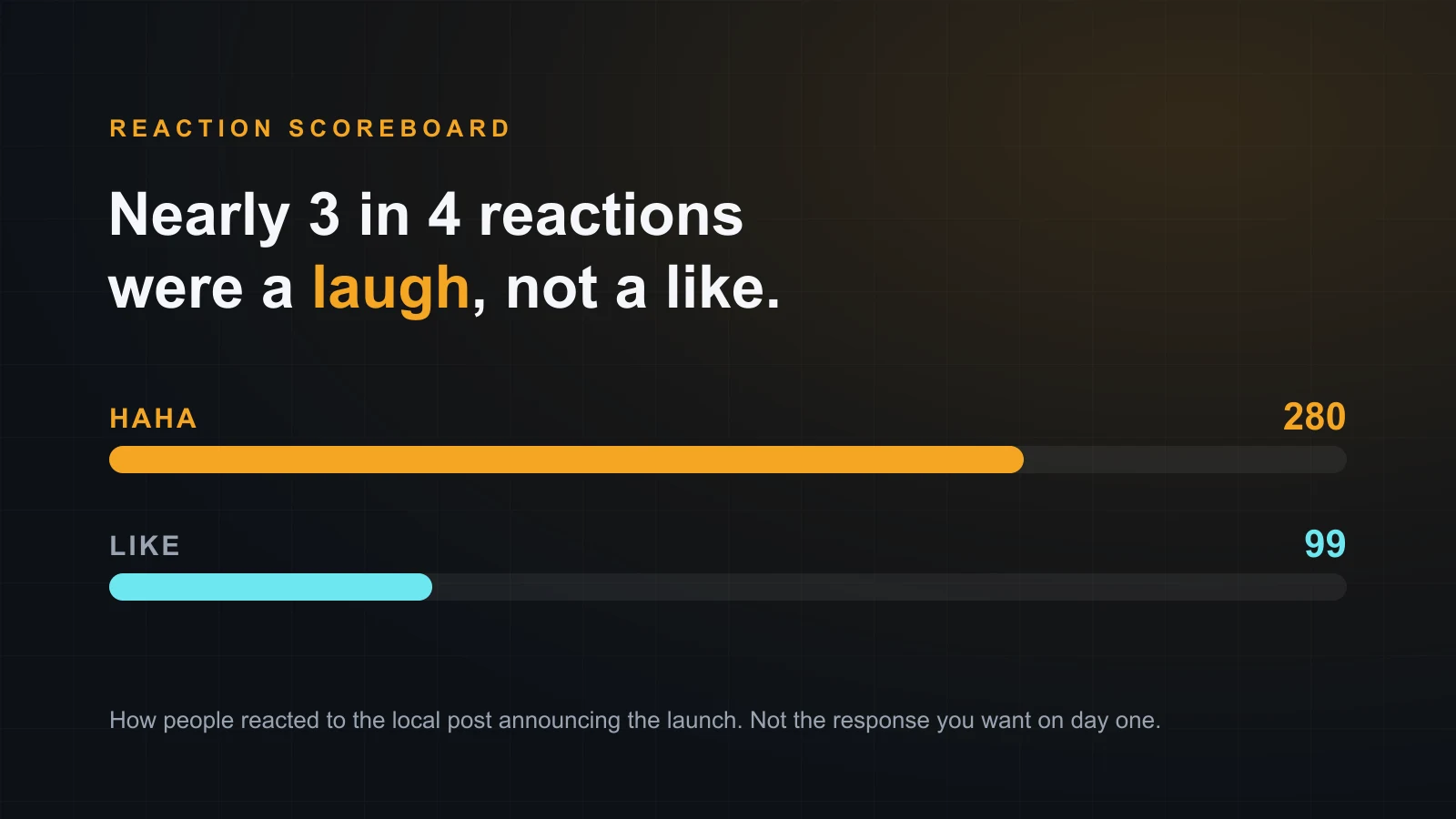
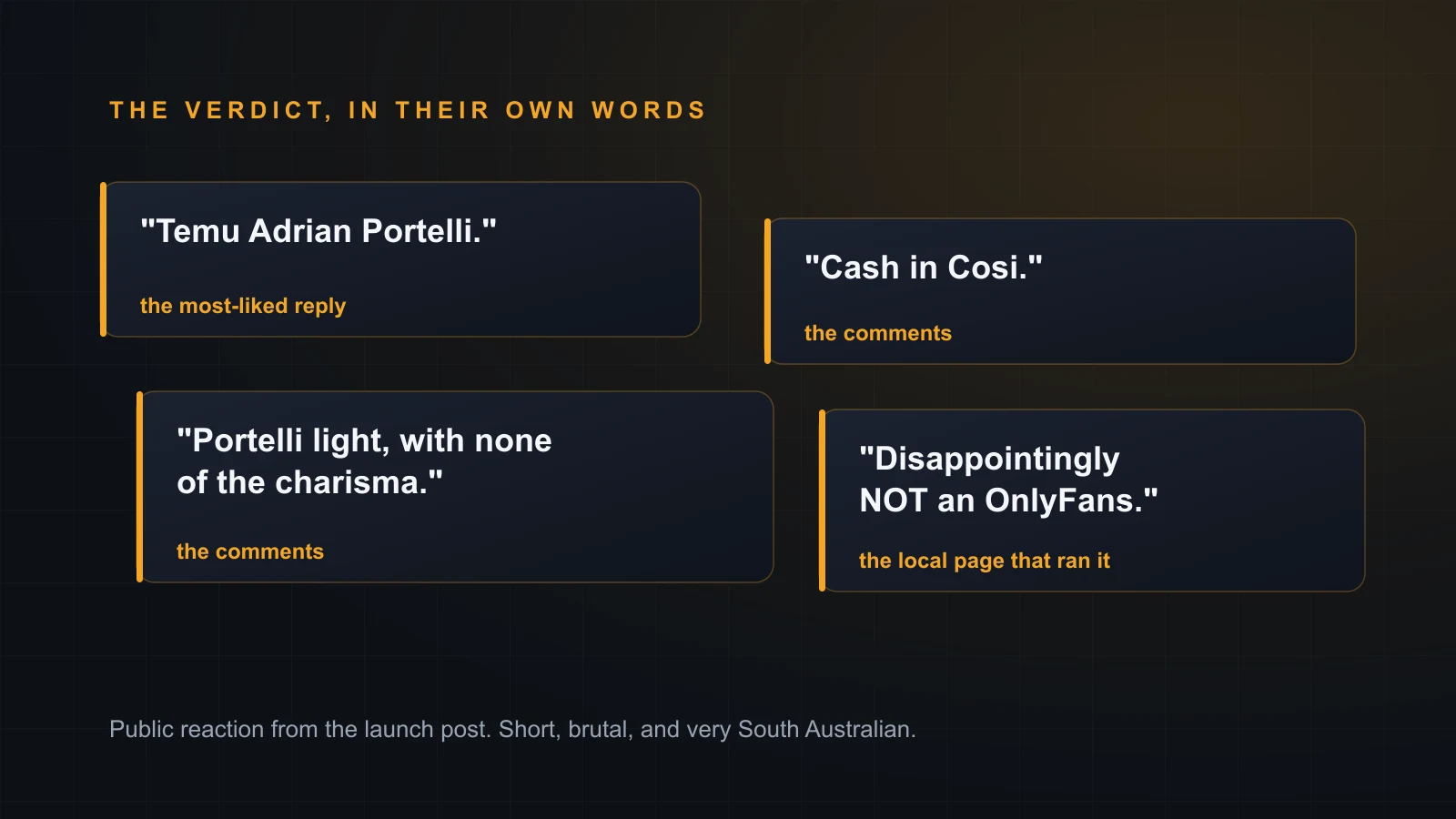
This week one of South Australia's most-loved media identities, Andrew "Cosi" Costello, launched a paid subscription called "Friends With Benefits." Within a few hours the verdict was in, and it wasn't the one he was hoping for. On one popular local page, Adelaide Mail, the top reaction to the news wasn't a like. It was a laughing face. One of the most-liked comments simply read: "Temu Adrian Portelli." Another: "Cash in Cosi." With friends like that, who needs enemies?
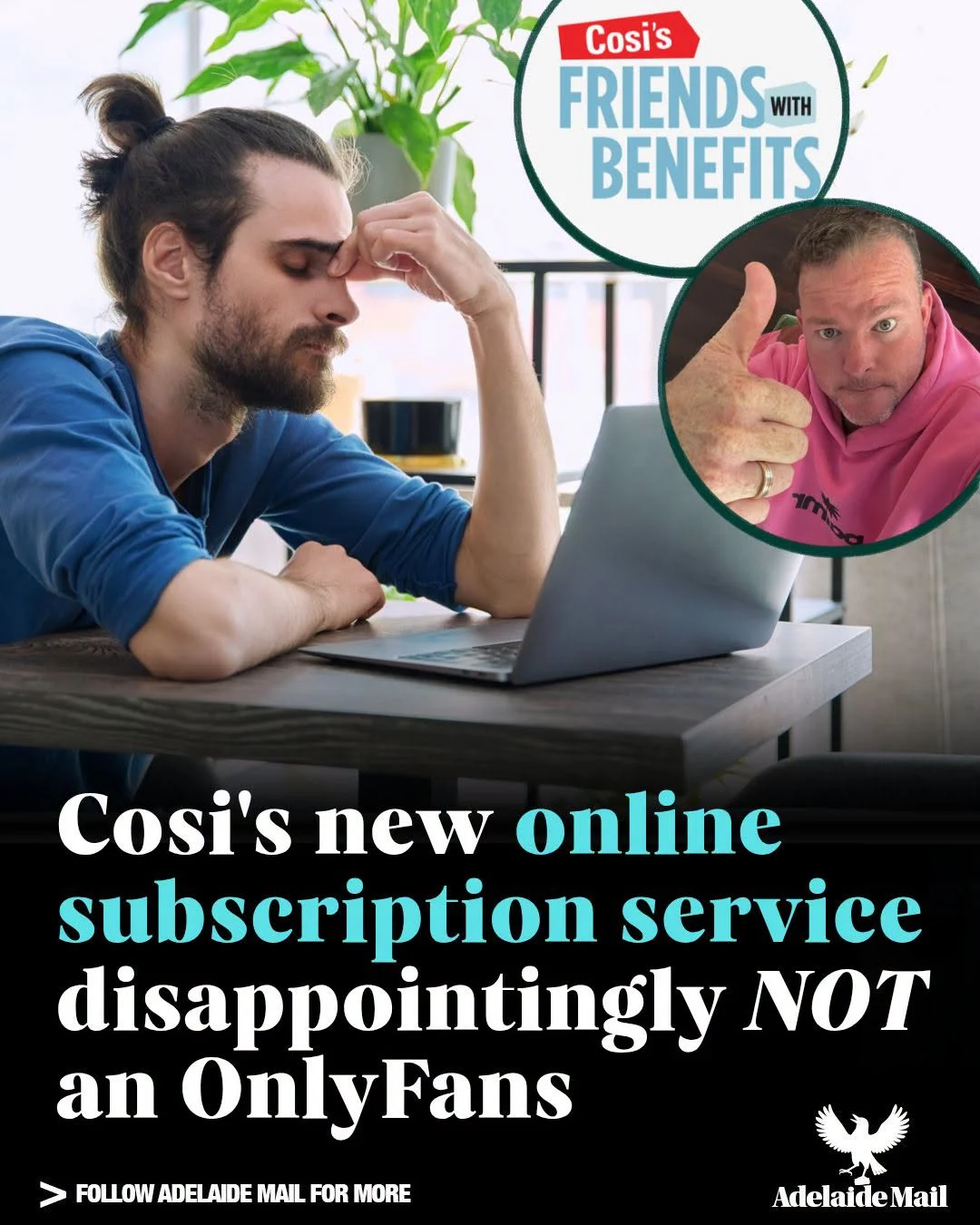
The post that lit the fuse. Image: Adelaide Mail, used with permission.
Let me say up front what this piece is not. It isn't a pile-on, and it isn't a shot at Cosi the person. He has spent years building real goodwill telling feel-good South Australian stories, and by every account he means well. This is a go-to-market post-mortem, the kind I would write about any launch, because "Friends With Benefits" is close to a textbook example of how a strong brand can misread its own audience. There are lessons in here for anyone who has ever tried to put a price on an audience's affection.
What "Friends With Benefits" actually is
Details are still thin, because the launch was a "pre-register" campaign rather than a live product. But as those who have seen the offer describe it, it is a paid subscription. You lock in for a minimum commitment, and in return you unlock discounts and vouchers at local retailers, with a supermarket voucher as the headline example doing the rounds. In plain terms: you pay a recurring fee for the privilege of saving money later.
If that structure sounds familiar, it should. It is a lighter version of the model Adrian Portelli made famous with LMCT+, and that resemblance is the first problem.
Mistake #1: He borrowed Portelli's model, not Portelli's audience
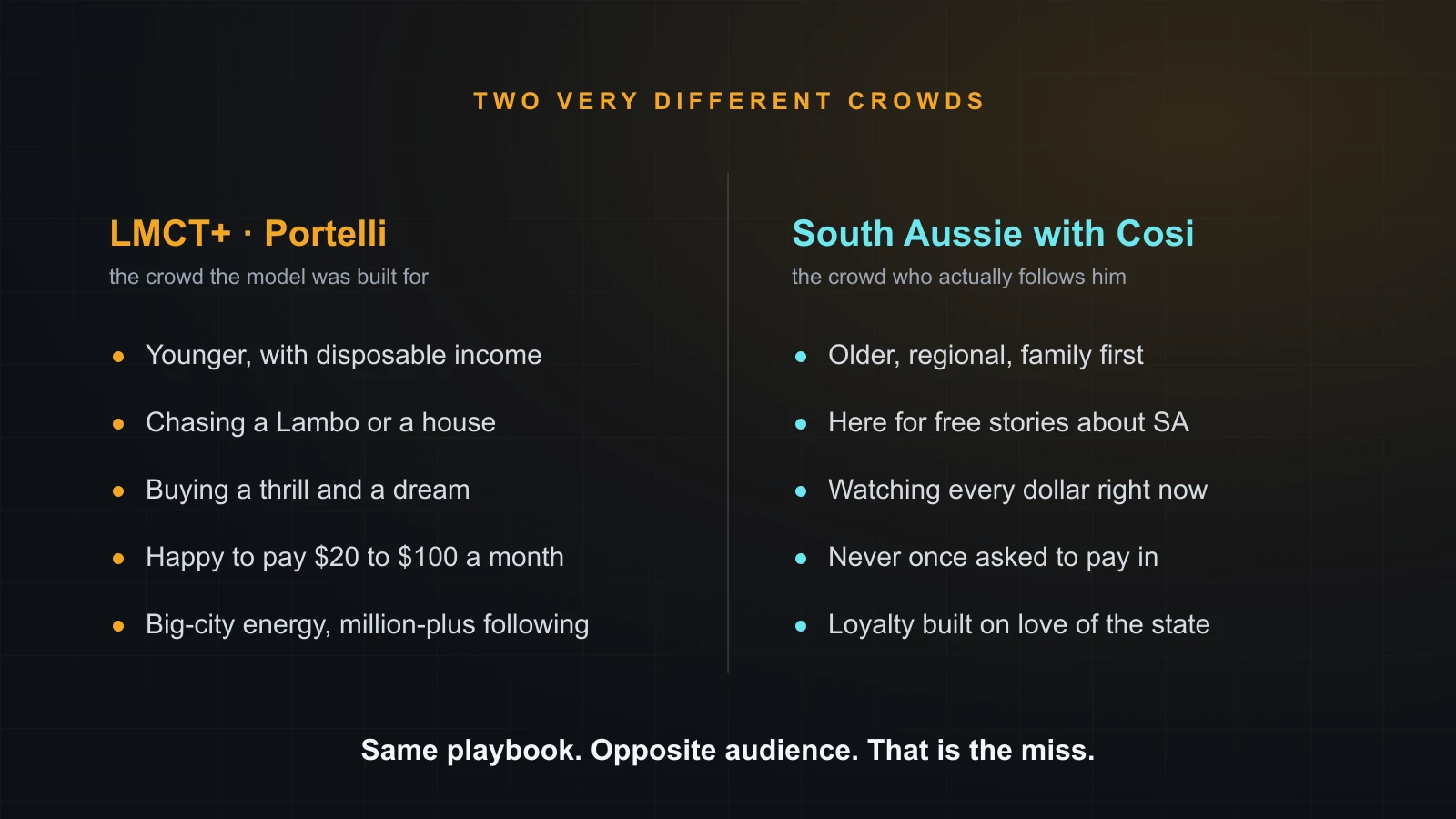
LMCT+ works because everything about it is matched. Members pay somewhere between $20 and $100 a month, and in return they are entered into draws for Lamborghinis, million-dollar homes and piles of cash. It is aspirational, high-octane, and built for a younger, disposable-income crowd who are buying a thrill and a dream. Portelli sells that fantasy in person, in supercars, to more than a million Instagram followers. Product, price, persona and audience all point the same direction.
Now look at Cosi's audience. It skews older, more regional, more family-oriented and, crucially, more budget-conscious. They didn't follow him for a shot at a supercar. They followed him for free stories about the state they love. Bolt a monthly subscription onto that relationship and the mismatch is instant. The crowd told him themselves, in three words: "Temu Adrian Portelli." When your own audience nicknames your product a knock-off inside the hour, that isn't a branding wrinkle you smooth out later. That is the market handing you back your positioning.
Mistake #2: He asked the wrong people to pay at the worst possible time
We are in the middle of a cost-of-living crisis. The single most tone-deaf move you can make in that environment is to ask your most loyal, and often least wealthy, followers to hand over a recurring fee for the chance to save a few dollars down the track. It inverts the value equation. A discount club is supposed to be a gift funded by someone else, whether that is partners, sponsors, or the retailer clipping a margin for the exposure. The moment the customer is the one paying for it, the maths stops making sense to the very people it is aimed at. Charging your budget-conscious base a subscription in 2026 isn't a growth strategy. It is a goodwill bonfire.
Mistake #3: "Pre-register" quietly told everyone he wasn't sure either
Here is the execution detail that did the most damage. Cosi didn't launch a product. He launched a pre-registration page. Pre-registration is a legitimate tactic, but only in a very specific context: when there is genuine scarcity and a clear, exciting payoff waiting at the end. A limited console drop, a hyped game, a hardware release. It builds a queue for something people already desperately want.
Used on a discount subscription with no obvious value yet, it does the opposite. It asks people to raise their hand for something before they have been given a single reason to. Worse, it signals hesitation. If the creator isn't confident enough to just sell the thing, why should I be confident enough to sign up for it? A pre-register with no perceived value doesn't build anticipation. It buys time for scepticism to compound, and hands every local meme page a clean, easy target while you are still deciding what the product even is.
Mistake #4: He copied a model that is currently on fire
Timing matters, and the timing here is unkind. The subscription-rewards-club model Cosi is echoing isn't just crowded. It is under active scrutiny. LMCT+ has been investigated by regulators in both South Australia and Victoria over whether its prize-draw mechanics amount to an unlicensed lottery dressed up as a membership, and proposed gambling reforms are aimed squarely at exactly this kind of structure.
To his credit, Cosi's version appears to swap the prize draws for straight discounts, which likely sidesteps those particular legal questions. But it opens a new one. Strip out the Lamborghini-sized jackpot and what is left to join for? You have kept the "pay a subscription" part that people are suspicious of and thrown away the "you might win a house" part that made them tolerate it. You inherit the association without the upside, which is precisely how you end up rebranded "Temu Portelli" by your own fans.
What a better launch would have looked like
None of this means Cosi can't or shouldn't monetise his audience. He absolutely should. He has earned it. He just needed to do it in a way that respects the relationship he built. A few things I would have pushed for:
• Make someone else pay for the value. A loyalty program where partner brands and retailers fund the discounts, free to the fan, protects the "for the love of SA" trust and still generates revenue. Fans win, sponsors get reach, Cosi keeps his halo.
• If there is a paid tier, make the value undeniable and immediate. No lock-in, no minimum term, no waiting period. Something so obviously worth it that nobody has to be talked into it.
• Read the room on price and timing. In a cost-of-living squeeze, lead with things that give before they take. A genuinely free perk first, then an optional upgrade for those who want more.
• Sell the thing. Don't pre-register it. Soft-launch quietly to a small group, learn, refine, and only go loud once the value speaks for itself. Don't hand the meme pages a layup.
The real lesson
Brand equity is borrowed, not owned. Cosi's audience lent him their trust on the understanding that the relationship was about South Australia, not about their wallets. "Friends With Benefits" tried to spend that trust before it had delivered any, and the market, as it always does, repriced him on the spot.
Go-to-market isn't the logo, the landing page or the launch-day post. It is the answer to one unglamorous question: who is this for, what do they get, and why now? Get that wrong and the best-loved brand in the state won't save you. Get it right and you don't need a pre-register campaign at all. People just buy.
Because here is the thing about a launch that misreads the room. The comments write themselves, the meme pages do your marketing for you, and every share travels a little further than the last. With friends with benefits like these, who needs enemies?
Public reaction referenced above is drawn from the launch post shared by local page Adelaide Mail, which lit up across Instagram and Facebook this week. Reaction counts and comments are paraphrased for commentary.